If you love coffee, you know that the way you brew it makes all the difference. Using a pour over coffee maker can unlock rich flavors and a smoother taste that your regular coffee machine can’t match.
But are you sure you’re getting the most out of your pour over? This guide will show you the best way to use your pour over coffee maker, so every cup is just right. Stick with me, and you’ll soon enjoy coffee that feels crafted just for you—fresh, full of flavor, and exactly how you like it.
Let’s dive in and transform your coffee routine.
Choosing The Right Pour Over Maker
Choosing the right pour over coffee maker makes a big difference. It affects taste, ease, and how much coffee you can make. Knowing what to consider helps you pick the best one for your needs. Focus on brand, material, size, and capacity. These factors shape your coffee experience.
Popular Pour Over Brands
Some brands are well-known for quality and design. Hario offers classic, reliable makers. Chemex is famous for its elegant glass carafes. Kalita provides flat-bottom filters for even brewing. Each brand has unique styles and features. Choose a brand that fits your style and budget.
Material Options
Pour over makers come in ceramic, glass, metal, and plastic. Ceramic keeps heat steady and looks nice. Glass shows the brewing process and is easy to clean. Metal is strong and lasts long. Plastic is light and good for travel. Pick a material that suits your daily use.
Size And Capacity
Size matters based on how much coffee you drink. Small makers brew one cup, perfect for solo use. Larger models can make up to six cups for groups. Think about your usual coffee needs. Choose a size that matches your routine.
Selecting Coffee Beans
Selecting the right coffee beans is key for a great pour over cup. The beans affect taste, aroma, and strength. Choosing beans that suit your taste makes the brewing process more enjoyable. Understanding roast levels, grind size, and freshness helps you pick the best beans.
Bean Roast Levels
Light roast beans keep more natural flavors. They taste fruity and bright. Medium roast beans balance acidity and sweetness. Dark roast beans have a strong, bold taste. They can be smoky or bitter. Pick a roast level that fits your flavor preference.
Grinding For Pour Over
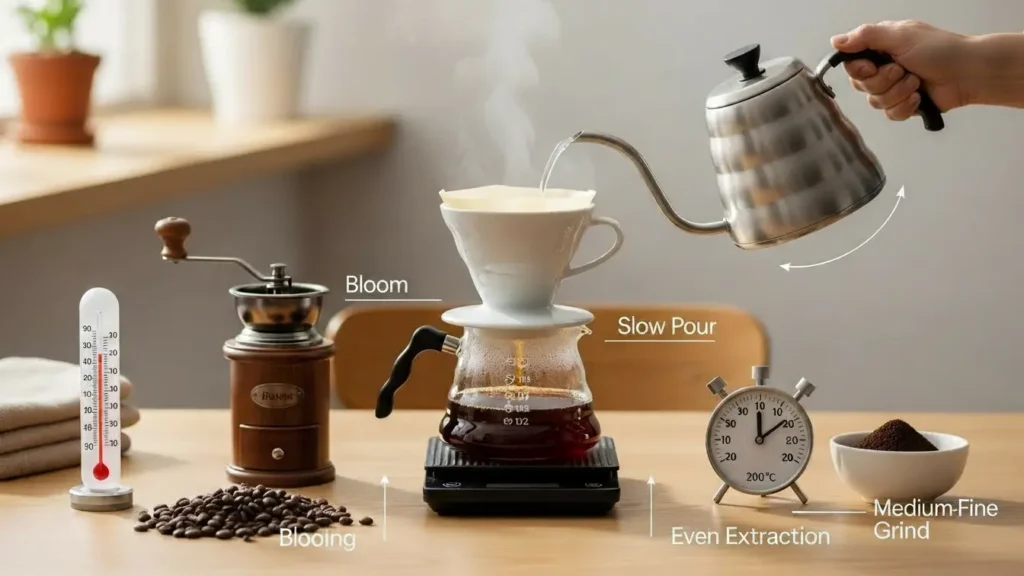
Grind size changes how coffee extracts. Use a medium to medium-fine grind for pour over. Too coarse makes weak coffee. Too fine makes coffee bitter. A consistent grind helps water flow evenly. A good grinder makes a big difference.
Freshness Tips
Fresh beans give the best taste. Buy whole beans and grind before brewing. Store beans in an airtight container. Keep them away from light, heat, and moisture. Avoid buying too much at once. Use beans within two weeks of opening.
Preparing Your Equipment
Preparing your equipment is key for a great cup of pour over coffee. Clean gear, proper filters, and the right water temperature make a big difference. This step sets the stage for a smooth brewing process and rich flavor.
Cleaning The Maker
Rinse your pour over coffee maker with hot water before use. Remove old coffee oils and residue to avoid bad taste. Use a soft brush or sponge to clean hard-to-reach spots. A clean maker ensures fresh coffee flavor every time.
Setting Up Filters
Place a fresh filter inside the coffee maker. Use filters designed for your specific model for best results. Rinse the filter with hot water before adding coffee grounds. This removes paper taste and warms the maker for brewing.
Boiling Water Temperature
Heat water to about 195°F to 205°F (90°C to 96°C). Water too hot can burn the coffee, too cold will under-extract flavors. Let boiling water sit for 30 seconds before pouring. This temperature range brings out the best taste in your coffee.
Brewing Technique
Brewing coffee with a pour over coffee maker is simple but needs care. The right technique brings out the best taste. Focus on three main parts: coffee-to-water ratio, pouring methods, and brewing time. These steps make your coffee smooth and full of flavor.
Coffee-to-water Ratio
The coffee-to-water ratio controls the strength of your coffee. Use about 1 gram of coffee for every 16 grams of water. For one cup, 15 grams of coffee and 240 ml of water works well. Adjust the amount to make coffee stronger or lighter. Measure both coffee and water for best results.
Pouring Methods
Pour water slowly in circles over the coffee grounds. Start from the center and move outward. Avoid pouring water directly on the filter. Pour in stages, letting the coffee bloom first. This helps release fresh flavors and aroma. Keep the water flow steady but gentle.
Brewing Time
Brewing time affects taste and strength. Aim for 2.5 to 3 minutes total. The bloom phase takes about 30 seconds. Pour the remaining water slowly after blooming. Too short or too long brewing makes coffee weak or bitter. Watch the time and pour carefully for best flavor.
Enhancing Flavor
Enhancing the flavor of your pour over coffee makes every cup special. Small changes in how you brew can bring out rich, fresh tastes. Focus on water quality, grind size, and pour speed to improve the flavor.
Water Quality Impact
Water makes up most of your coffee. Clean, fresh water is key. Avoid tap water with strong chlorine or odors. Use filtered or bottled water for best results. The right water helps coffee taste clear and bright. Poor water can make coffee taste dull or bitter.
Adjusting Grind Size
Grind size changes how coffee brews. Too fine means slow brewing and bitter taste. Too coarse means fast brewing and weak flavor. Find a medium grind for balanced extraction. Try small changes to find your perfect grind. This controls the strength and taste of your coffee.
Experimenting With Pour Speed
Pour speed affects how coffee extracts flavors. Pour too fast and water passes quickly. Coffee tastes weak or sour. Pour too slow and coffee can taste bitter. Pour evenly in small circles. Try slow, steady pours to get smooth taste. Practice helps you find the best speed.
:max_bytes(150000):strip_icc()/Web_1500-SEA-kalita-wave-pour-shot-jesse-raub-01-d4e2aa9b3a574c44abca52742a2874a4.jpg)
Credit: www.seriouseats.com
Cleaning And Maintenance
Keeping your pour over coffee maker clean is key for great taste. Regular cleaning stops old coffee oils and residue from building up. This helps your coffee taste fresh every time. Proper care also makes your coffee maker last longer.
Daily Cleaning Steps
After each use, discard the used coffee grounds and filter. Rinse the dripper and carafe with warm water. Use a soft sponge to wipe away leftover oils. Avoid soap if possible, as it can leave a taste. Let all parts air dry before storing.
Deep Cleaning Tips
Once a week, soak the dripper and carafe in warm water and vinegar. Use a 1:1 mix to remove stains and build-up. Scrub gently with a soft brush or cloth. Rinse thoroughly with clean water to remove vinegar taste. Dry completely before next use.
Storage Recommendations
Store your coffee maker parts in a dry place. Keep them away from dust and moisture. Avoid stacking heavy items on top to prevent damage. Store all parts separately if possible. This keeps your coffee maker ready for the next brew.
Troubleshooting Common Issues
Troubleshooting common issues with your pour over coffee maker helps improve your brew. Small problems can affect taste and quality. Fixing them makes your coffee better and more enjoyable. Below are simple tips to solve typical problems.
Weak Or Bitter Coffee
Weak coffee often means too little coffee or too much water. Try using more coffee grounds or less water. Bitter coffee can come from over-extraction. Pour too slowly or use too fine a grind. Adjust the grind size to medium or medium-coarse. Pour steadily and not too slow.
Uneven Extraction
Uneven extraction causes some parts of coffee to be strong, others weak. Pouring water unevenly is a common cause. Pour in small circles, starting from the center outward. Avoid pouring only in one spot. Stirring the coffee bed gently can help even extraction.
Filter Problems
Filter issues can block water flow or leave particles in coffee. Use the right filter size for your dripper. Rinse paper filters before brewing to remove paper taste. Check for tears or folds in the filter. Replace filters that tear easily or cause slow dripping.
:max_bytes(150000):strip_icc()/update-faw-product-chemex-classic-series-coffeemaker-social-d5dcd545753e4a6193149cafc69c8166.jpg)
Credit: www.foodandwine.com
FAQ’s About Best Way to Use Pour Over Coffee Maker
How Do I Use A Pour Over Coffee Maker Correctly?
Start by placing a filter in the dripper and rinsing it with hot water. Add medium-ground coffee, pour hot water slowly in circles, and let it bloom. Continue pouring water steadily until you reach the desired amount. Enjoy fresh, flavorful coffee.
What Grind Size Works Best For Pour Over Coffee?
A medium to medium-coarse grind is ideal for pour over coffee. This size allows proper extraction and prevents over-extraction or clogging. Using the right grind size ensures balanced flavor and a smooth brewing process.
How Much Coffee And Water Should I Use?
Use a coffee-to-water ratio of 1:15 to 1:17. For example, 20 grams of coffee to 300 ml of water. Adjust ratios based on taste preference, but this range delivers optimal strength and flavor for pour over coffee.
Why Is Pouring Technique Important In Pour Over Brewing?
Pouring technique controls extraction and flavor balance. Slow, circular pours evenly saturate coffee grounds, preventing channeling and bitterness. Consistent pouring ensures a clean, rich cup with full aroma and body.
Final Verdict
Using a pour over coffee maker gives you control and fresh flavor. Measure your coffee and water carefully for the best taste. Pour slowly and evenly to avoid bitterness. Clean your equipment after each use to keep it working well.
Enjoy the process as much as the coffee itself. A little practice makes perfect. Start today and savor every cup you make. Simple steps lead to great coffee.

Hi, I’m Joshua Miller, a U.S.-based food lover, review writer, and Co-founder of KitchenWink.com. I hold a Bachelor of Science in Food Science and Culinary Technology, and for over five years I’ve been testing kitchen gadgets like air fryers, blenders, and other cooking tools.
I’m also a home cook, so every product I review is tried in real kitchens—not just in theory. My reviews are based on real results, simple fixes, and tips that anyone can use. With both formal training and hands-on testing, I make sure my advice is clear, honest, and practical.
My goal is simple: to help home cooks choose the right tools and make cooking easier every day.